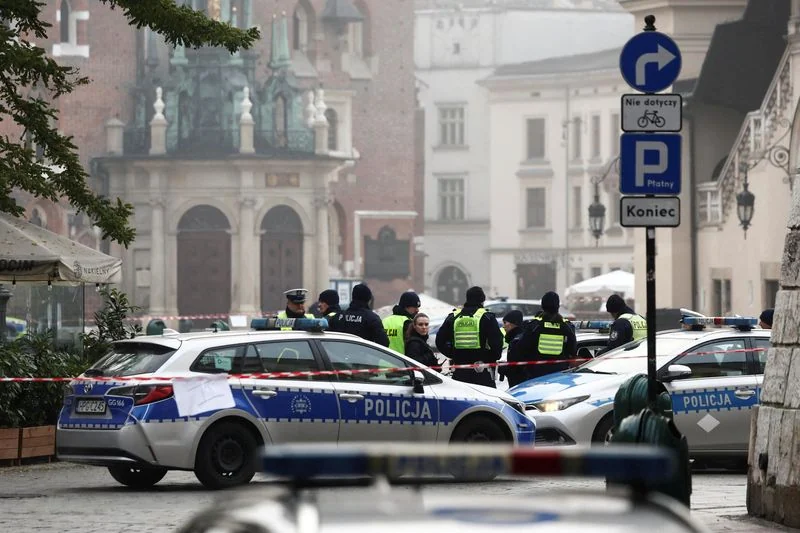
Poland has long taken pride in being safer than many of its Western European neighbours. Saturday's mass shooting in Krakow's historic main square, which left six people dead and seventeen wounded, has shattered that comfort. Authorities said the attack was likely inspired by far-right ideology, and the country is now in two days of national mourning.
The scale of the violence is hard to absorb. The 24-year-old suspect's parents and sister were later found dead at their home in Ostrowiec Swietokrzyski, which means the killings did not stop at the square. Two police officers were among the wounded, and one of them remained in hospital fighting for his life. The suspect himself is in critical condition.
The reaction in Krakow has been visible and solemn. The old town's market square stayed closed, cafes shut their doors, flags flew at half-mast, and mourners left candles across the area. St Mary's trumpet call, a tradition the city has kept for generations, was suspended for twelve hours, the first time that has happened since 1939. Warsaw also tightened security in busy tourist areas.
Officials are right to focus on the wider pattern, not only this single attack. A string of school stabbings in October, which officials linked to extremist content online, came before the shooting. A cafe employee in Warsaw described the feeling plainly: recent events are shaking people's sense of security. That worry is not irrational. If extremist material is reaching young people through online channels, then the state needs to treat that as a security problem with the same seriousness it gives to physical threats, including faster monitoring of violent extremist content and closer coordination between schools, police and online platforms.
The officers who stopped the gunman deserve recognition, and Prime Minister Donald Tusk was right to name Senior Constable Jakub Kulik and Senior Constable Artur Moranski as heroes. But praise cannot substitute for prevention. Poland should use this mourning period to ask hard questions about how the attacker was radicalised and what warning signs were missed.