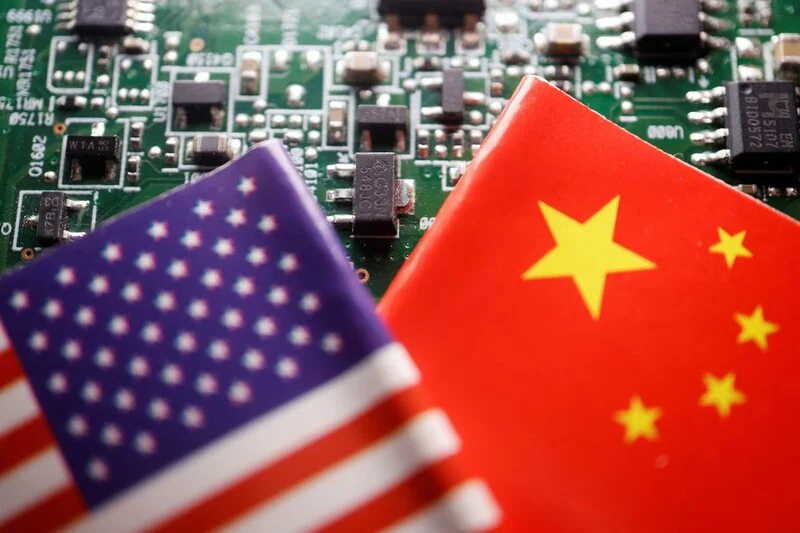
Chinese technology heavyweights fell on Tuesday after Washington announced fresh restrictions aimed at keeping advanced U.S. artificial intelligence chips away from Chinese companies that reach them through overseas data centres. Hong Kong-listed Alibaba Group shares dropped 5%, while Baidu plunged nearly 7%. JD.com fell 2.6% and Tencent slipped more than 3%. The sell-off was broad, but the policy behind it deserves a sharper look than the market's reflex.
The rule issued on Monday requires licences for shipments of advanced AI chips to data centres in countries including Singapore, Thailand, Malaysia, Indonesia and Brazil. Foreign data centres supplying significant computing power to China-headquartered companies will also need licences within 90 days or face further restrictions. The measures target a channel through which Chinese AI developers have rented computing capacity at overseas facilities and reached Nvidia processors without direct chip exports to China. The logic is clear: close the loophole that lets the hardware arrive by rental rather than by sale.
The weakness is that a loophole closed in one place tends to reopen in another. Licensing requirements in five named countries and a 90-day deadline for foreign facilities give Chinese firms a window to reorganise their compute arrangements. Washington has chosen to regulate where chips sit rather than what they are used for, and that invites exactly the kind of workaround the rule is meant to stop. A policy that depends on tracking every rented rack across borders needs enforcement capacity that the report does not show exists.
Baidu's problems are not only geopolitical. Its third-quarter revenue slipped 1% year on year, broadly in line with analysts' expectations, as weakness in its core advertising business offset growth in artificial intelligence-related services. That detail matters. The chip rule punishes Chinese AI ambitions, but the drop in Baidu's shares also reflects a core business that is not growing. Investors who blame Washington alone are missing the earnings picture.
The timing adds another layer. The new controls arrive ahead of the planned meeting between U.S. President Donald Trump and Chinese President Xi Jinping in Shenzhen on Thursday, and investors are also awaiting Nvidia's quarterly results for clues on global AI demand. Chip access is becoming a bargaining chip in a wider relationship. My view is that Washington should publish clear enforcement criteria for overseas data centres and pair them with predictable timelines, so that companies can plan rather than scramble. Restrictions that move with each summit will keep rattling markets without changing much on the ground.