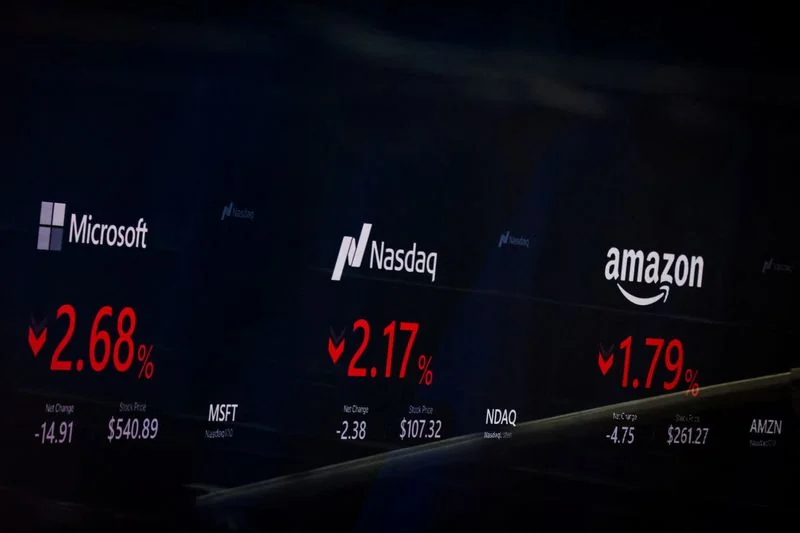
Stock markets fell sharply on Thursday and Friday, and the blame has been placed on the midterm elections. The Nasdaq dropped 5.5% on Thursday, its biggest decline since the tariff-triggered "Liberation Day" rout in 2025. In Seoul, trading was halted after the open when stocks plunged 8%, and the Nikkei slumped more than 6% in Tokyo. Investors feared that a Democratic sweep would bring regulation and slow the AI boom that has been propelling US growth and computer component supply chain stocks worldwide.
Politics may have pulled the trigger, but the report makes clear that the gun was already loaded. Shane Oliver of AMP said the concern over tech and AI valuations "had been building for a while now," and that the midterms provided "the trigger for a pullback." Steve Sosnick of Interactive Brokers said investors had already begun to question whether the heavy AI spending would produce returns sufficient to justify billions in debt and equity capital. George Bouboheras of K2 Asset Management, whose surname is given as Bouboueras in the report, described a selloff that began months ago on valuation and free cash flow concerns before accelerating on the data centre question.
Mark Fuchs of Fuchs Capital Partners offered the most useful point: the sector had been repricing downward for well over a month before the election. If that is right, the election result gave investors an excuse to act on doubts they already held, not a new reason to doubt. Sosnick's warning that stocks "priced to perfection" leave little room for error fits that reading.
Not everyone sees the selloff as a verdict on AI itself. Charu Chanana of Saxo cautioned against reading the move as Democrats ending the AI boom, noting that AI leadership is a strategic priority for both parties, particularly against China. Her distinction is the right one. Supporting AI leadership is different from allowing data centre construction to proceed "at any cost or pace." Her point that forced liquidations can make selling self-reinforcing also deserves attention, since leverage can turn a repricing into a rout.
Investors should be cautious about calling the bottom. Allen Huang of Mega Financial Holding argued that a limit-down move in TSMC may mark the tail end of a downturn, but the report offers no evidence that this signal is reliable. Oliver himself said it is too early to say markets have bottomed and that a correction is more likely than a bear market, provided the economic outlook holds. That is the sensible frame: a repricing of expensive assets, not a verdict on the American economy.