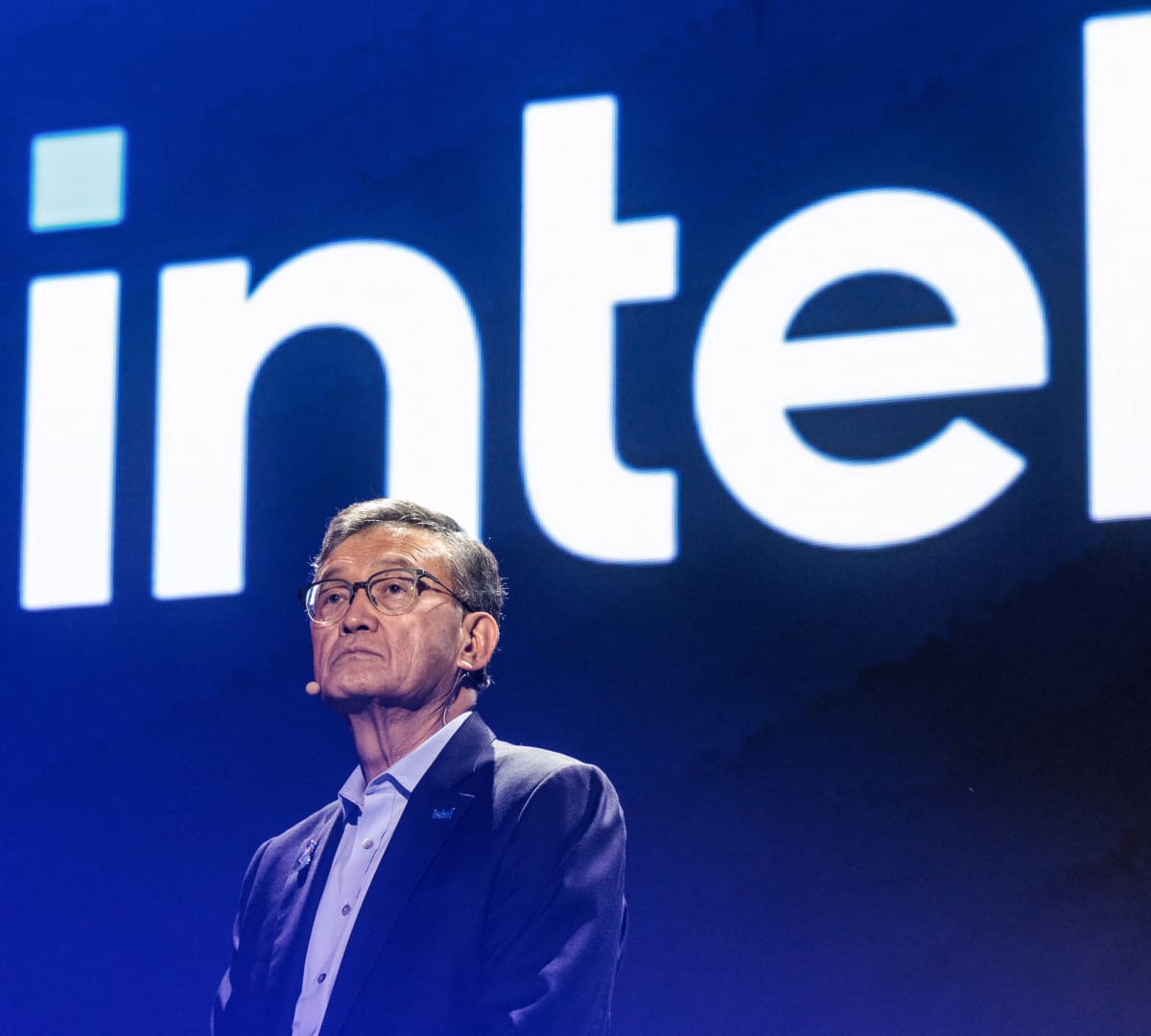
Intel shares fell sharply in extended trading after the chipmaker forecast fourth-quarter revenue of $15 billion to $16 billion, well below the $17.1 billion analysts had expected according to LSEG. The company blamed continued softness in the global PC market, a reasoning that deserves scrutiny rather than acceptance. Revenue in its client computing group fell 5% from a year earlier to $8.1 billion, missing estimates, and that is the business Intel built its reputation on.
The bright spot is real but narrower than the headline total suggests. Overall revenue climbed 21%, and data center and AI revenue jumped 78% to $7.3 billion. Chief executive Lip-Bu Tan says demand for CPUs remains robust, and finance chief David Zinsner expects industry server CPU units to grow more than 30% in both 2026 and 2027. Agentic AI applications that rely on CPUs to orchestrate tasks are the reason for that optimism, and Oracle's expanded deal this week gives it a concrete example.
The weak spots are harder to wave away. Zinsner said the PC slowdown will continue at least through the first half of next year, which means investors should not expect a quick recovery in the segment that still generates much of the company's revenue. A fire-related production loss at an Israeli fab, which killed two workers and seriously injured a third, will cost about $600 million in lost revenue over two quarters. Intel's foundry business, meanwhile, has yet to prove it can compete at the level the company promised, and its Ohio fab was originally expected to deliver chips in 2025.
The stock's roughly 150% climb this year made the sell-off predictable, but it does not make it unjustified. Investors priced in a turnaround faster than the numbers support. The government's 10% stake and billions from Nvidia and SoftBank have strengthened the balance sheet, yet a $23 billion equity offering in August also diluted existing shareholders.
Intel should keep the discipline Zinsner describes and avoid chasing every foundry promise made under former chief Pat Gelsinger. It should show customers and shareholders clear evidence of demand before spending more capital. If the server CPU growth holds and the foundry work pays off, the company will have earned its rebound. Until then, the guidance is a reminder that a recovering story still needs to deliver results.