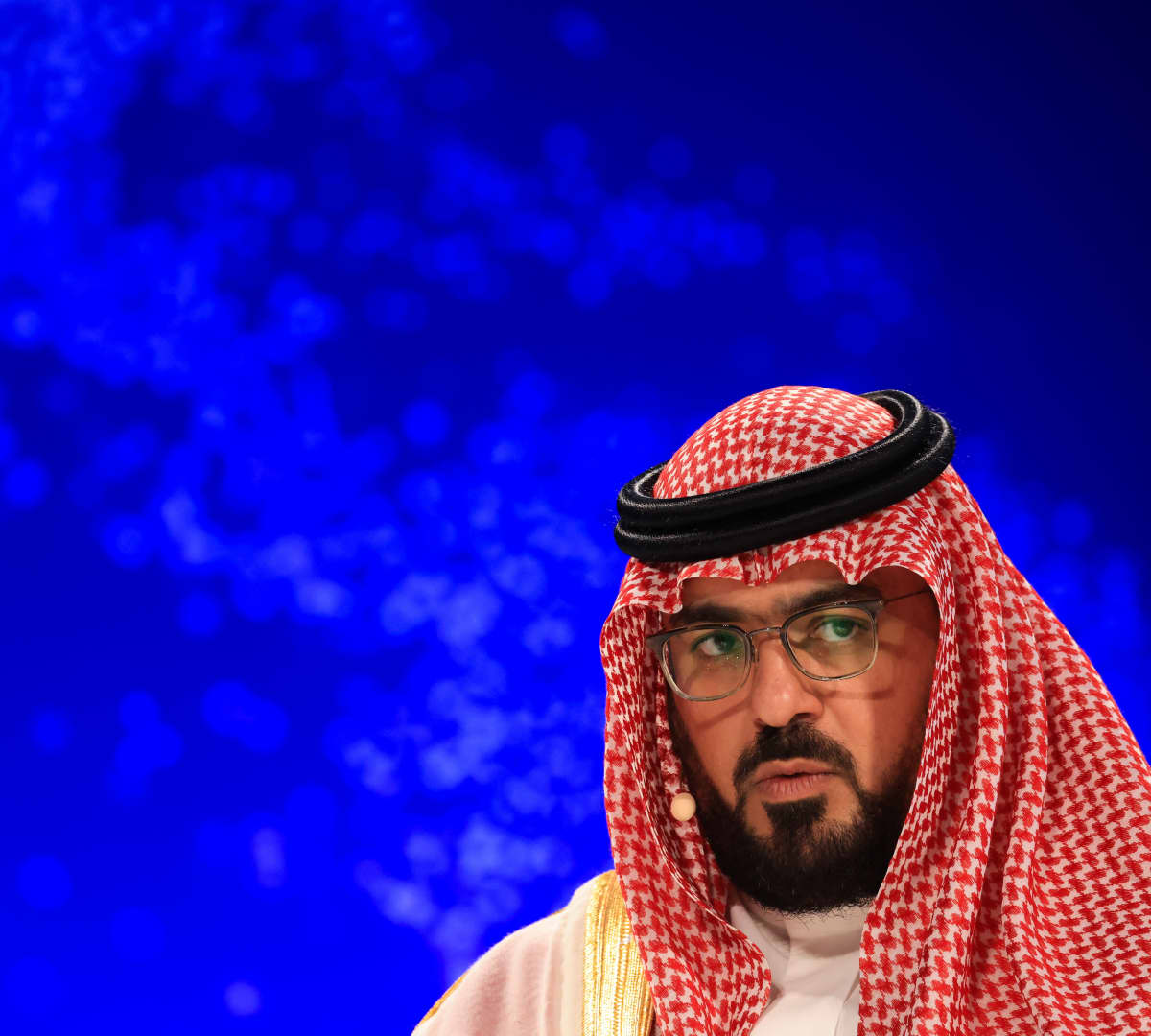
Saudi Economy Minister Faisal Alibrahim told CNBC on Friday that the kingdom's diversification strategy has shifted from "spending and delivery at any cost" to "spending and delivering at the right cost."
The shift follows the scaling back or cancellation of several flagship projects during a sharp economic contraction. Alibrahim said the government is moving toward a "policy-first approach" and a clearer business environment. He cited a recently announced 15% minimum effective tax rate on multinational profits, which he said would "create a clearer environment for the private sector to operate."
The report says Saudi Arabia has reassessed projects including the NEOM region and "The Line" city, withdrawn funding from the LIV Golf tournament, halted construction on a planned skyscraper in Riyadh, and postponed hosting the 2029 Asian Winter Games at Trojena, which is part of NEOM.
Real GDP contracted 3.8% in the third quarter, according to government figures. Oil activities fell 20.4% year on year, while non-oil activities rose 1.9%. Net foreign direct investment inflows dropped 19.5% year on year in the second quarter.
The Saudi Ministry of Finance expects the economy to contract about 2.1% this year and rebound 10.9% next year. Oxford Economics forecasts a steeper decline, with the economy shrinking 3.4% this year and 4% in 2027. Akanksha Samdani, lead economist at Oxford Economics, said Vision 2030 is entering "a new phase focused on returns." She said some giga projects are being scaled back or delayed, while investment continues in manufacturing, logistics, tourism, mining and technology.
The report attributes the attacks on infrastructure to Iran-backed Houthi militants in Yemen. Alibrahim said the strikes caused real human and economic costs. Neil Quilliam, managing director of Azure Strategy, said investors are assessing whether the attacks show a persistent vulnerability. He said the strikes could affect confidence in Saudi Arabia as a destination for tourism, entertainment and sports.