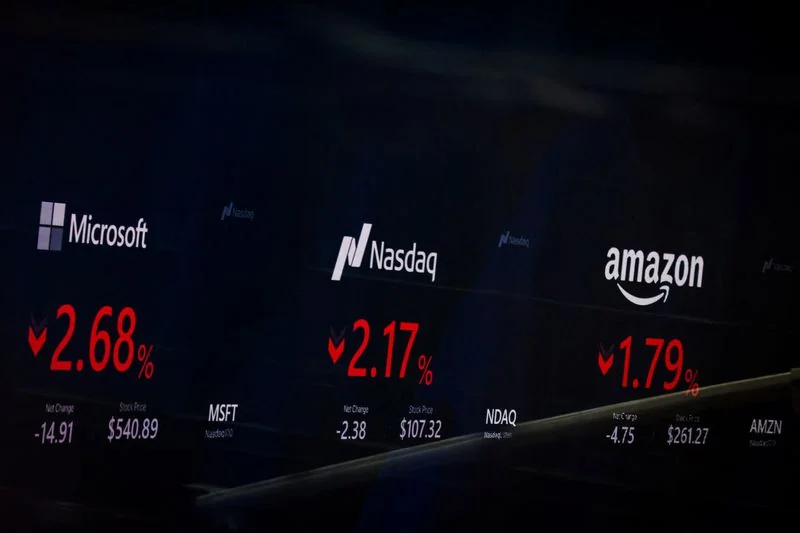
Tech and AI stocks sold off sharply after the US midterm elections, and analysts disagree on how serious the drop is. The Nasdaq fell 5.5% on Thursday, its biggest drop since the tariff-triggered "Liberation Day" rout in 2025, according to Reuters. On Friday, trading in Seoul was halted after the open when stocks plunged 8%, and the Nikkei in Tokyo slumped more than 6%.
Reuters reported that investors feared a Democratic sweep at the midterms would bring regulation and slow the AI boom that has been driving US growth and computer component supply chain stocks worldwide.
Several analysts linked the selloff to valuations and spending concerns that predated the election. Steve Sosnick, chief strategist at Interactive Brokers in New York, said investors had already begun to question whether heavy AI spending would generate enough returns to justify billions in debt and equity capital. Shane Oliver, chief economist at AMP in Sydney, said tech and AI-related trades had been trading on relatively high multiples, leaving them vulnerable. He said the midterms "provided the trigger for a pullback" and that it is "probably going to be more of a correction than a bear market," provided the economic outlook is unaffected.
George Bouboura of K2 Asset Management in Melbourne said the selloff had accelerated on the prospect that the US data centre rollout would be affected by the change in control of the Senate and House. He said the buildout is now anticipated to be scaled back.
Charu Chanana, chief investment strategist at Saxo in Singapore, cautioned against reading the move as a sign that Democrats will end the AI boom. She said AI leadership remains a strategic priority for both parties, particularly in competition with China. She also said panic and forced liquidations appear to be amplifying the decline.
Allen Huang, a vice president at Mega Financial Holding's equities trading department, said further margin account liquidation was likely and that the market may be in the final stage of capitulation. Mark Fuchs of Fuchs Capital Partners in Singapore said the sector had been repricing downward for more than a month before the election.